
Tracks and chains for ice and snow
When choosing traction, the main thing to weigh up is grip against flotation. Winter adds ice and snow: the ground freezes, snow packs and ice forms – and that takes traction that bites into a hard surface.
Which tracks are best on snow and ice?
Traction tracks with narrow, widely spaced plates are built for grip – and so for snow and ice too. The shape and spacing of the plates also make them self-cleaning, which keeps snow from packing into them.
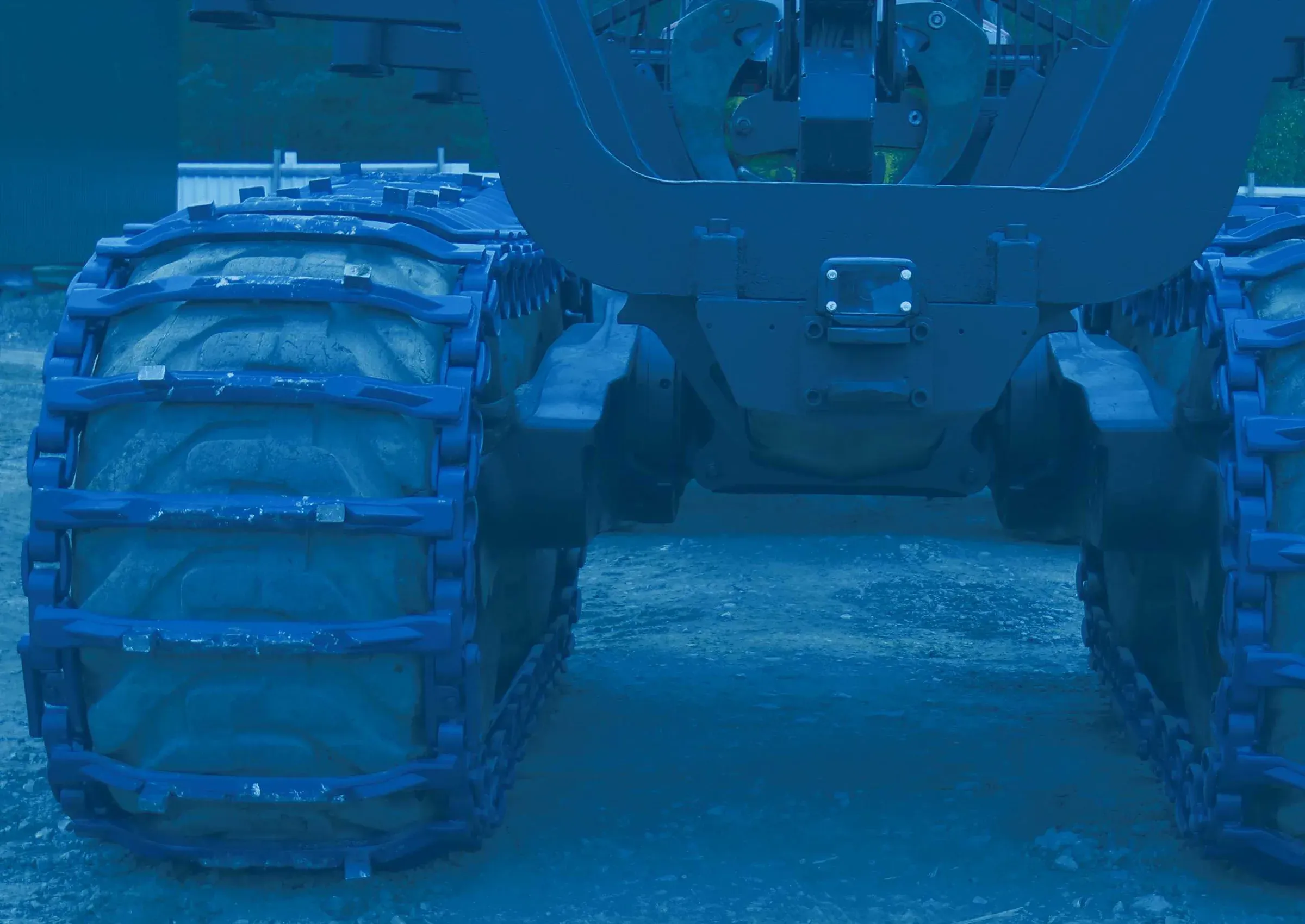
XL Multigrip – maximum grip on frozen ground
With its narrow, slightly pointed plates, XL Multigrip bites down into hard and frozen ground. The plates are spaced so that snow has very little chance to pack in anywhere, so the tracks run freely on the tyres. An investment that adds grip the rest of the year as well.
XL Uni – the all-rounder for every month of the year
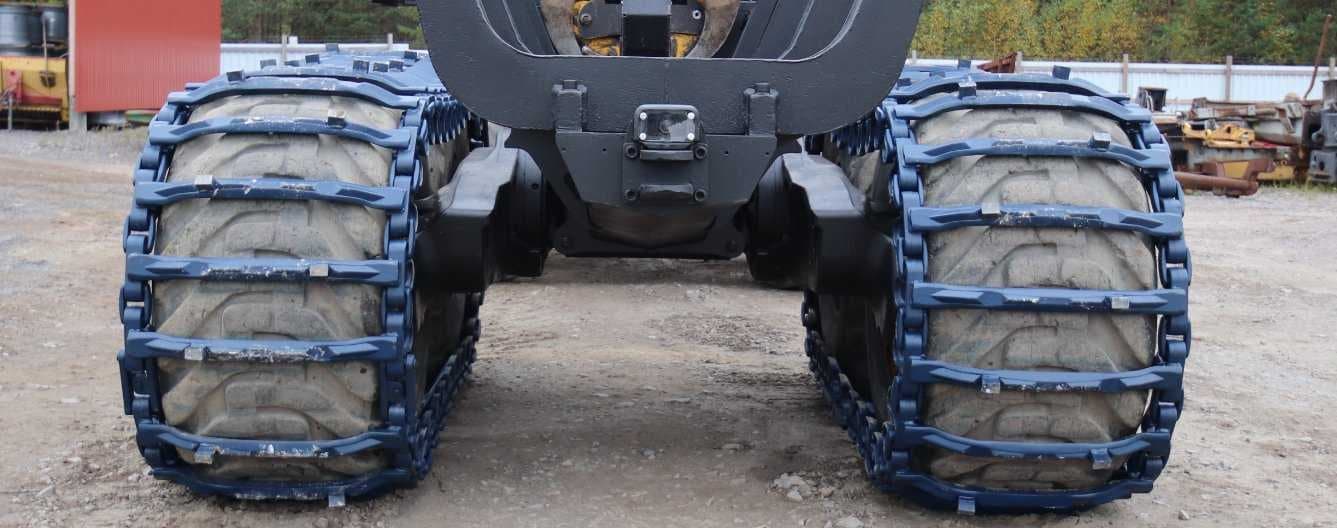
If you need one pair of all-round tracks, XL Uni works well on most ground all year, winter included. The Uni plates are only a few millimetres wider than the Multigrip plates and have a U-shaped profile that creates two narrow, parallel contact surfaces on every plate.
That gives XL Uni better flotation with only marginally less grip than XL Multigrip – which makes it an excellent winter track.
Chains have real advantages in winter
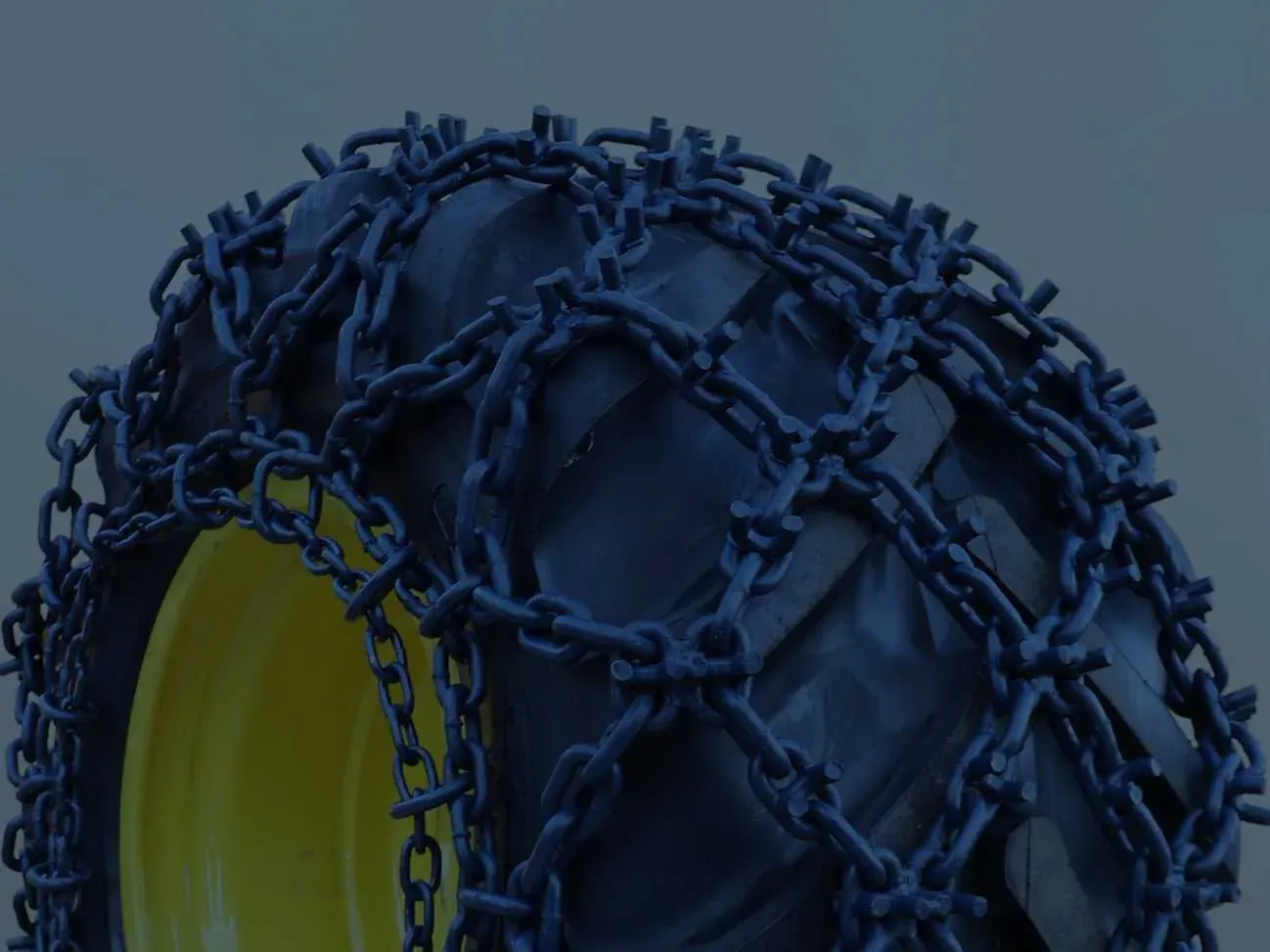
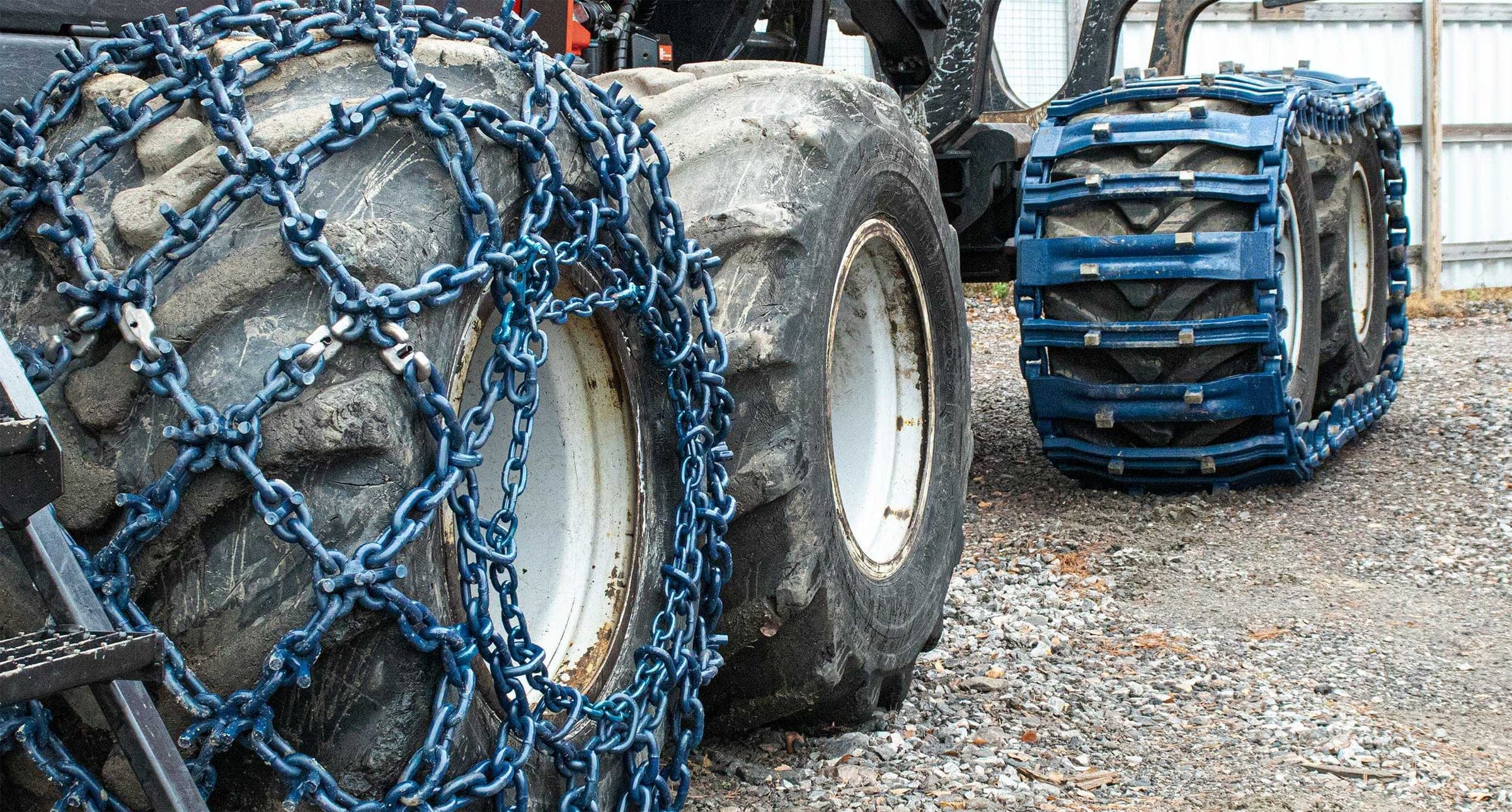
Many forestry operators choose chains for the winter months, either together with tracks or on their own. Correctly mounted chains do not sit as still on the tyre as tracks do, so the studs move more and at more angles – and find grip in hard but porous winter ground.
If you do not need to invest in traction tracks, chains can be the perfect answer for the winter months: a pair of chains costs roughly a third of the cheapest tracks. XL Chains come in two versions – Standard with the stud on top and Pro with the stud underneath.
Combine tracks and chains
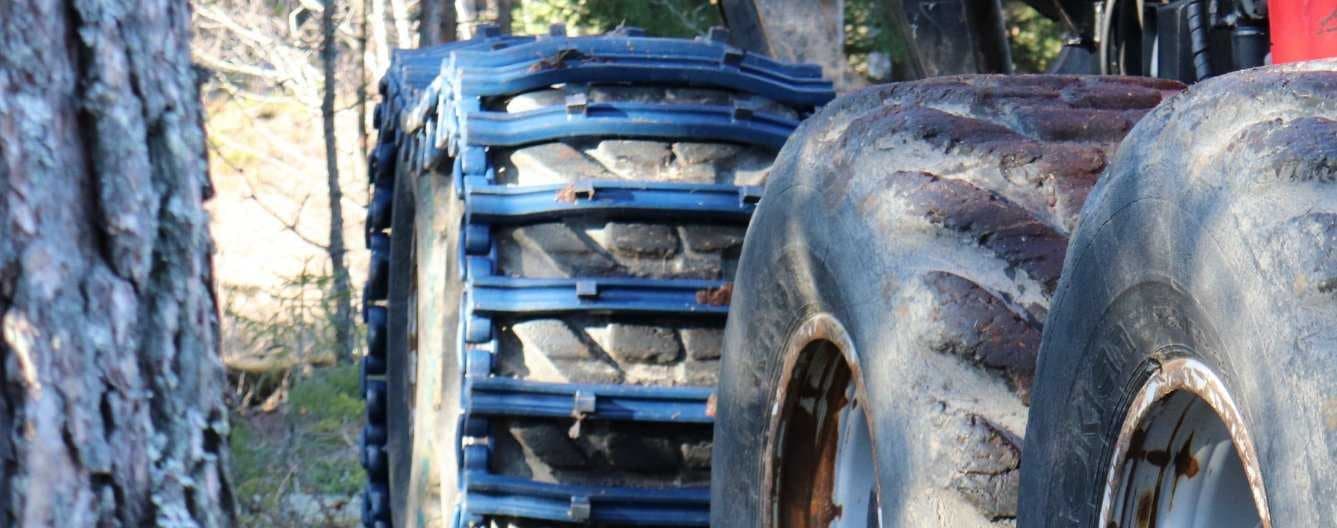
Another common way to prepare a forestry machine for winter is to combine tracks and chains. The chains usually go on the part with the lowest ground pressure, and bogie tracks often on the part with the highest – the load bed of a forwarder, for example.
That way you get the best of both: the chains provide the grip and the tracks carry the heavier part of the machine.
Maintain your traction to keep the grip
Maintenance matters for the life and performance of your traction, whatever the season.
Mount and tension correctly
Make sure tracks and chains are correctly mounted and tensioned. Replace track locks and tighten the tensioning chain as needed. How to tension your tracks.
Re-tighten the track locks
Re-tighten the track locks regularly so the track keeps its tension.
Replace worn parts straight away
Check for wear and replace worn track locks and studs as soon as they need it – it extends the life of your tracks. Track locks and studs are among our accessories.
Avoid welding studs in sub-zero temperatures, and always pre-heat as described in the welding instructions.
Which traction suits your machine?
Tell us which machine you run and what ground you work on, and we will help you choose tracks, chains or a combination.